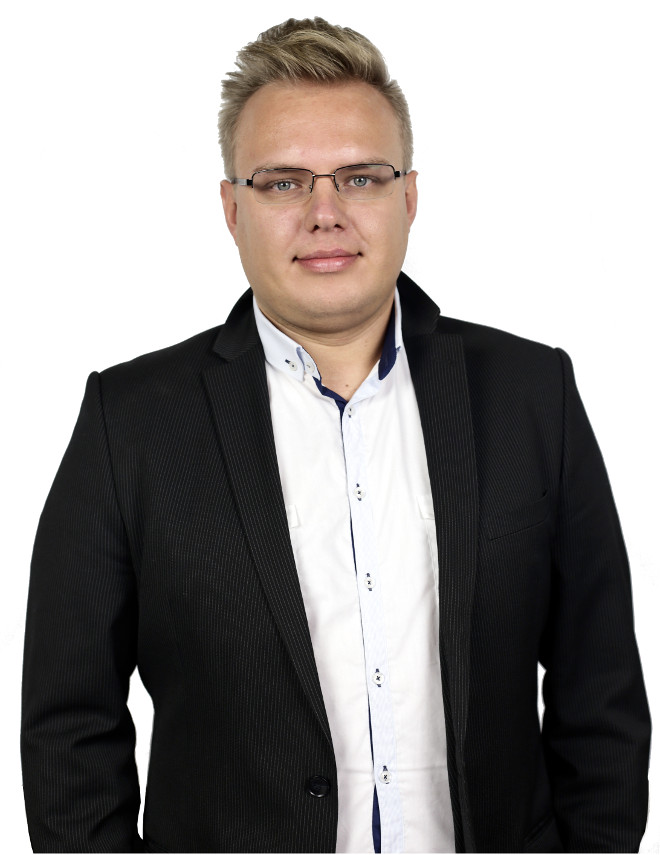
I am an Associate Professor at the Department of Artificial Intelligence, Wroclaw University of Science and Technology. I received MSc in Computer Science from the Wroclaw University of Technology, Poland in 2008 and PhD in late 2012. In 2012, I also received an MSc in Computer Science from Blekinge Institute of Technology, Sweden. In 2020, I received a Habilitation (D.Sc.) in Information and Communication Technology. I was a Visiting Scholar at Stanford University in 2013 and a Visiting Professor at the University of Technology Sydney in 2018 and 2019. I have authored over 100 scholarly and research articles on a variety of areas related to complex networks and computational network science, focusing on the extraction and dynamics of communities within social networks, spreading processes in complex networks and the analysis of multilayer networks. In 2015 I received three years scholarship for the best young scientists awarded by the Polish Ministry of Science and Higher Education. You can meet me at most of the top conferences on complex networks and social informatics, e.g., NetSci, NetSciX, IC2S2, ASONAM, SocInfo etc. In 2020 I was selected as Senator to Wrocław University of Science and Technology Senate. Since 2021 I co-lead the Netowork Science Lab at Wrocław Tech.
My PhD thesis topic was A Method for Group Extraction and Analysis in Multilayer Social Networks
, so as I have already mentioned one of my research area is communities within complex social networks, their evolution, analysis and prediction of their future behaviour.
Main research areas
Complex Networks
Social Network Analysis
Dynamic of Social Networks
Spreading Proceses in Complex Networks, Especially Multilayer Netwoks
Multilayer Social Networks
Group Extraction in Multilayer Social Networks
Group Analysis in Multilayer Social Networks
Group Dynamic in Multilayer Social Networks

Czuba, M., Bródka, P. (2022). Network Diffusion: A Package to Simulate Spreading of Multiple Interacting Processes in Complex Networks. IEEE DSAA 2022 The 9th IEEE International Conference on Data Science and Advanced Analytics.
PDF
Main repository with code
Runnable Code Ocean capsule
Presentation
Czuba, M., Nurek, M., Serwata, D., Qui, Y., Jia, M. Musiał, K., Michalski, R., Bródka, P. (2024). Network Diffusion – Framework to Simulate Spreading Processes in Complex Networks. Big Data Mining and Analytics, 7(1), ; https://doi.org/10.26599/BDMA.2024.9020010
Testing Community Detection Algorithms in Multi–layered, Multiplex and Multiple Social Networks
This is the extention of LFR Benchmark introduced by A. Lancichinetti, S. Fortunato, F. Radicchi
in the paper Benchmark graphs for testing community detection algorithms. Community detection is one of the hottest topics in network science. While for simple (one layered) social networks there is hundreds of different algorithms for multilayer social networks there is a few. While for simple (one layered) social networks there is a number of reference dataset like karate club or football league, and few widely accepted and well tested benchmarks like GN Benchmark or LFR Benchmark for multilayer social networks there is a none. This paper propose an extension of well-known LFR Benchmark which will enable researchers to test and compare community detection algorithms in multilayer, multiplex and multiple social networks.
Bródka P. A Method for GroupExtraction and Analysis in Multi-layered Social Networks Ph.D. disertation, Wrocław, Poland, 2012
arXiv.org:1302.1369
Bródka P., Grecki T.: mLFR Benchamark: Testing Community Detection Algorithms in Multilayer, Multiplex and Multiple Social Networks.
If you are using our mLFR Benchmark please cite our work and work of A. Lancichinetti, S. Fortunato and F. Radicchi
Java Source Code (Eclipse project)
The Method for Group Evolution Discovery in Social Networks
The continuous interest in the social network area contributes to the fast development of this field. The new possibilities of obtaining and storing data facilitate deeper analysis of the entire network, extracted social group and single individuals as well. One of the most interesting research topic is the dynamics of social group, it means analysis of Group Evolution over time. Having appropriate knowledge and methods for dynamic analysis, one may attempt to predict the future of the group and then manage it properly in order to achieve or change this predicted future according to specific needs. Such ability would be a powerful tool in the hands of human resource managers, personnel recruitment, marketing, etc.
The social Group Evolution consists of individual events and seven types of such changes have been identified in the paper: continuing, shrinking, growing, splitting, merging, dissolving and forming. To enable the analysis of Group Evolution a change indicator – inclusion measure was proposed. It has been used in a new method for exploring the evolution of social group, called Group Evolution Discovery (GED).
Introduction to the GED Method the poster or/and the presentation.
The MS SQL Script with GED method - V_0.1
GED implementationin Python by Diakidis, Georgios, et al. who used GED in the article Predicting the evolution of communities in social networks Proceedings of the 5th International Conference on Web Intelligence, Mining and Semantics. ACM, 2015.